Navopatia Field Station is an off-grid field camp on the Agiabampo Estuary/Sea of Cortez, 14 kilometers north of the Sonora/Sinaloa border, open from December through mid March. The Station is a long day’s drive south of Tucson.

We offer rustic, comfortable accommodations to students, researchers, and eco-tourists interested in natural history. We live and work closely with the local community and are a great outlet for personal cultural exchange.
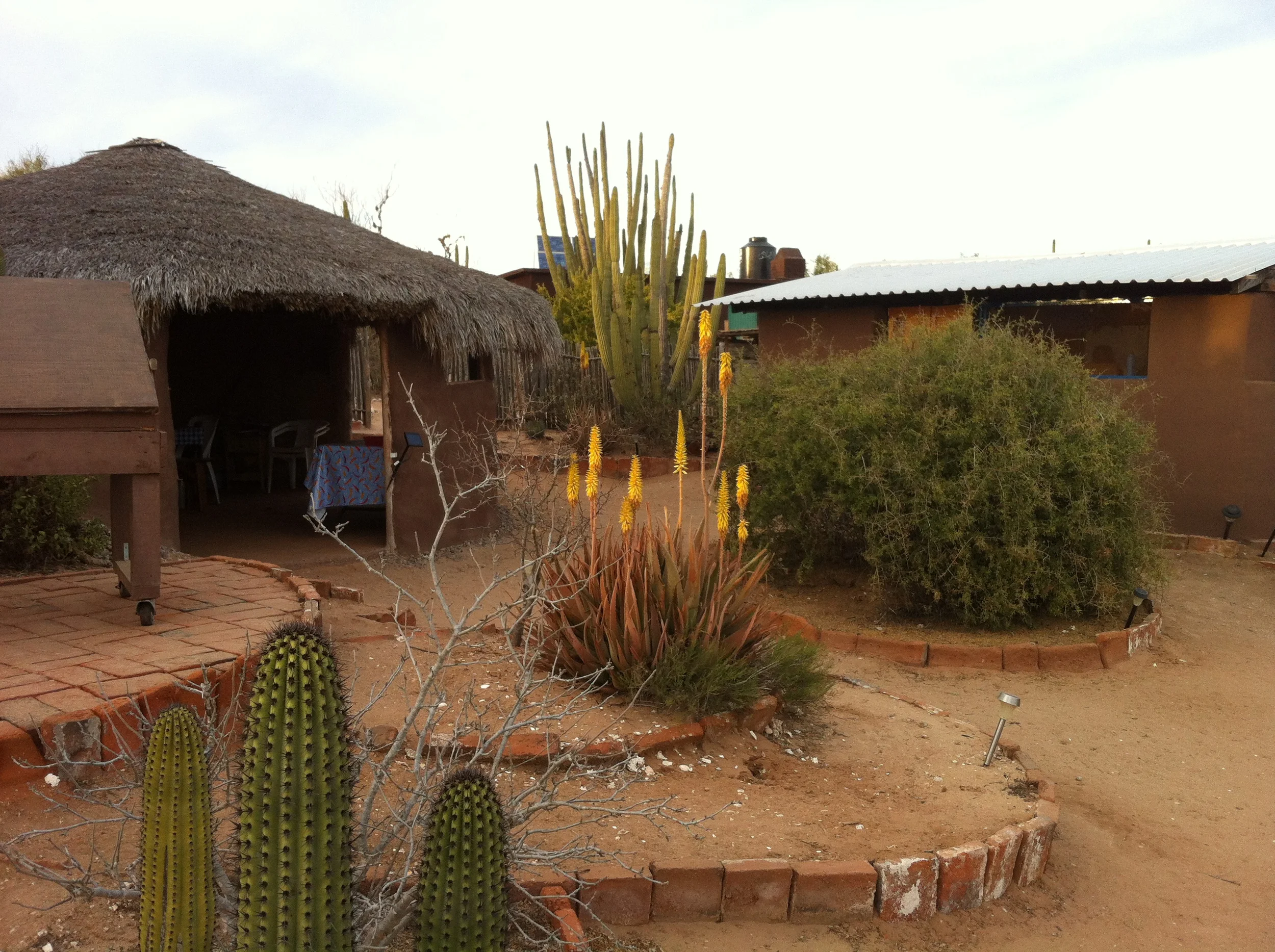
The rustic lodging gives visitors the unique opportunity to engage the natural surroundings and live in rugged conditions with great food and an unmatched atmosphere. Our accommodations include rooms in naturally built buildings, spacious wall tents, a camping space, and an elegant casita that sleeps two.
Three excellent meals are provided each day. Toilet facilities are open-air pit toilets. There is a propane heated shower. The station is off the grid, far from power lines and water service. All freshwater is collected from rain catchment and carefully conserved.
We have a small fleet of kayaks and canoes to explore the estuary and access study sites. We also have an extensive reading library which includes scientific reference materials, field guides, novels, and general reading material.
Many recreational opportunities are available in the vicinity, including: swimming, hiking, bird watching, dolphin watching (we sometimes are able to swim with dolphins), and many others. Guided bird tours can be arranged with experienced guides in motorized watercraft, kayaks, on foot, or auto.
Many visitors stay for weeks or months, while others come just for a day of birding or kayaking.
The land surrounding the field station is a beautiful Organ Pipe Cactus (Pitaya) forest found nowhere else on earth. It offers excellent opportunities for exploring and discovery.
We are open from mid-December to late March. Space is extremely limited, so we do ask that you make reservations prior to your visit. For reservations please contact navopatia@gmail.com
Stay Rates:
Per person: (all full stay rates include use of kayaks, 3 prepared meals, water, full sleeping accommodations and use of all other amenities. Members deduct $5 from all full stay prices. Student/Research rates available upon request.)
1 night: full accommodations -$70 US donation
1 night: camping-$45 US donation
1 night: casita - $100 US donation
*Memberships can be obtained onsite or by emailing navopatia@gmail.com (see below for driving directions)
Activity Rates:
Day use of Kayaks: $20 per day per person
Single meals: $15 per person per meal
Guided Boat/Bird Tours: $150 per boat (8 people max)
If you would like a tour please contact us two weeks prior to the date you wish to tour.

What do I need to bring with me?
The field station is in a very remote area and you will need to bring a few extra things with you if you are planning on staying for more than a couple of days. Three delicious meals and water are included with your stay, though cocktails, beer and similar sundries are not included in the nightly rate.
Clothing:
Be prepared for cloudy, foggy weather, as well as warm, sunny, (dare I say hot?) weather. Nights are cool, so a jacket is a nice thing to have with you. It is advisable to wear long pants, long-sleeved shirts and close-toed shoes while walking in the cactus dominated thorn forest.
Sunglasses
Sunscreen
Warm hat
Sunhat
Other items:
Books: we have a great collection of books and always love to add to the library. Bring your favorites, you can leave them if you like, or take them home. Reading is a favorite past-time of visitors.
Camera
Cards
Tools (screwdrivers, wrenches, cheap wood saws, etc. These all make great gifts to local folks, and sometimes we need them too!)
Binoculars
Headlamp/Flashlight w/ batteries
Sleeping Bag (if you are camping, or if you know you are a cold sleeper)
Tent and ground pad (if you are camping)
Musical instruments (we have a few but if you like to play)
Water Bottle
Toys (for gifts e.g. balls, etc for local kids inexpensive, dollar store stuff is fine)
School supplies for local kids (pencils, pens, spiral notebooks, etc. It can be quite expensive here and we donate school supplies to local students and schools.